PIPELINE

Breaking new ground from concept to clinic

PIPELINE

Breaking new ground from concept to clinic

Oncology

Immunology and Neurology

Discovery
IND Enabling
Phase 1
Phase 2
Phase 3
Partner
Degrader | BTK
Bexobrutideg (NX-5948)
Chronic lymphocytic leukemia 2L+ monotherapy (initiating mid-2026)

clinical trials logo

 
Chronic lymphocytic leukemia 3L+ triple-exposed, monotherapy

clinical trials logo

 
Chronic lymphocytic leukemia, Non-Hodgkin’s lymphoma 1L+ basket combination study (initiating mid-2026) clinical trials logo

NX-5948-203

 
B-cell malignancies Relapsed/refractory (R/R)

NX-5948-301


NX-5948: Oral, CNS-penetrant BTK degrader

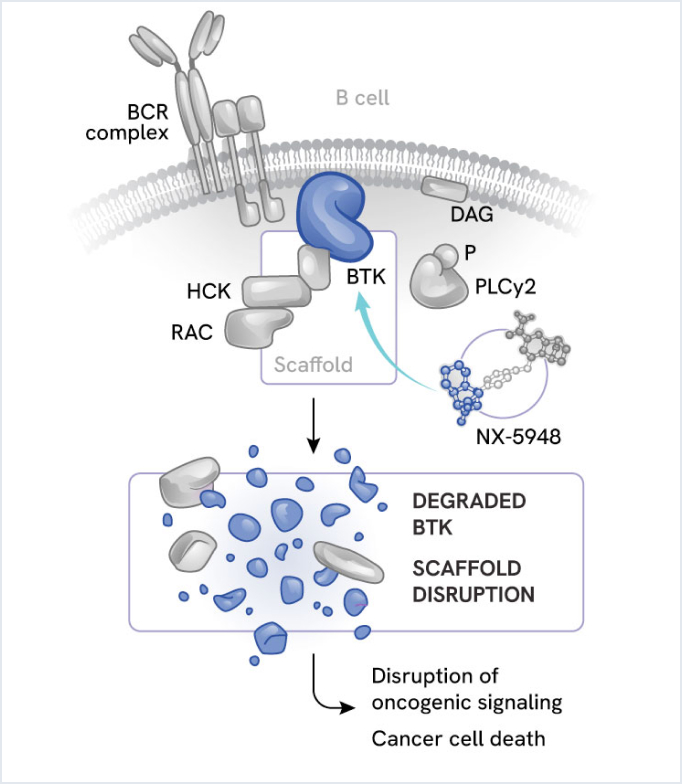
NX-5948 is an oral, CNS-penetrant, small molecule degrader of Bruton’s tyrosine kinase (BTK) being evaluated in chronic lymphocytic leukemia (CLL), non-Hodgkin’s lymphoma (NHL), and Waldenström macroglobulinemia (WM).

Scientific rationale

BTK is a master regulator of B-cell activity and is a clinically validated target for hematologic malignancies. While BTK inhibitors have shown clinical success, drug resistance often emerges due to acquired mutations in BTK.

By removing BTK rather than merely inhibiting its activity, NX-5948 may circumvent both kinase domain mutations and scaffolding-mediated resistance mutations to provide more durable responses. Additionally, its brain penetration suggests potential for treating challenging CNS-involved leukemias and lymphomas.

Degrader | BTK + IKZF
Zelebrudomide (NX-2127)
B-cell malignancies

NX-2127-001


Zelebrudomide (NX-2127): Oral dual degrader of BTK and cereblon neosubstrates

Zelebrudomide is an oral small molecule dual degrader targeting Bruton’s tyrosine kinase (BTK) and the cereblon neosubstrates IKZF1 (Ikaros) and IKZF3 (Ailos), which are implicated in B and T cell activity. Zelebrudomide is being evaluated in patients with B-cell malignancies with a focus on aggressive forms of non-Hodgkin lymphoma (NHL).

Scientific rationale

B-cell malignancies often rely on multiple signaling pathways for growth and survival. Two key pathways include:

  1. BTK: A master regulator of B-cell activity. Aberrant BTK signaling can drive malignant B-cell proliferation.
  2. IKZF1/3: These transcription factors play crucial roles in B-cell development and function.

Importantly, IKZF1/3 also represses proinflammatory cytokine expression from T cells. This dual role of IKZF1/3 in malignant B cells and T cells provides a unique opportunity for therapeutic intervention. By combining BTK degradation with cereblon-mediated immunomodulatory activity, zelebrudomide aims to provide enhanced therapeutic benefit across a spectrum of B-cell malignancies.

Inhibitor of degradation | CBL-B
NX-1607
Immuno-oncology

NX-1607-101


NX-1607: Novel CBL-B inhibitor for immuno-oncology

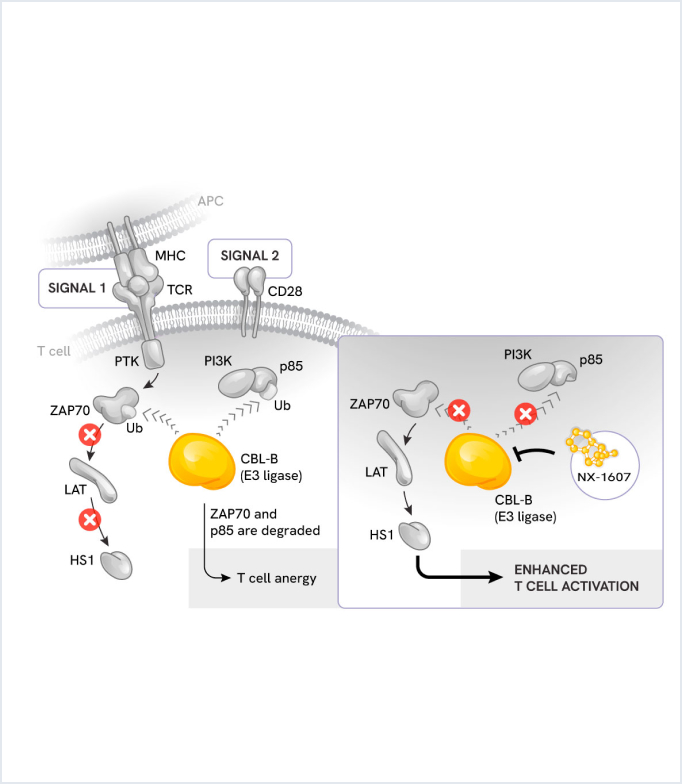
NX-1607 is a first-in-class, small molecule inhibitor of Casitas B-lineage lymphoma proto-oncogene-b (CBL-B), an E3 ligase that acts as a critical checkpoint in the immune system. This innovative compound is being developed as part of Nurix’s immuno-oncology program and is currently being evaluated in advanced malignancies.

Scientific rationale

CBL-B plays a crucial role in regulating immune cell function:

  1. In the context of cancer, CBL-B acts as a brake on the immune system by negatively regulating T cell activation, inhibiting NK cell activity, and suppressing overall immune responses.
  2. CBL-B achieves this immunosuppressive effect through the degradation of specific inhibitory signaling proteins downstream of the T cell receptor.
  3. CBL-B operates in immune cells and the tumor microenvironment, making it a compelling immuno-oncology target.
Degrader | Pan-mutant BRAF
BRAF degrader
Solid tumors
 
Degrader | Undisclosed
Multiple
Undisclosed
 
Degrader | Undisclosed
Multiple
Undisclosed clinical trials logo

clinical trials logo

 
Degrader antibody conjugate | Undisclosed
Multiple
Undisclosed clinical trials logo

clinical trials logo

 
Degrader | BTK
Bexobrutideg (NX-5948)
Chronic lymphocytic leukemia 2L+ monotherapy (initiating mid-2026)clinical trials logo
Phase 3roche logo
Chronic lymphocytic leukemia 3L+ triple-exposed, monotherapyclinical trials logo
Phase 2roche logoroche logo
Chronic lymphocytic leukemia, Non-Hodgkin’s lymphoma 1L+ basket combination study (initiating mid-2026)

NX-5948-203

Phase 2roche logo
B-cell malignancies Relapsed/refractory (R/R)

NX-5948-301

Phase 1Broche logo

NX-5948: Oral, CNS-penetrant BTK degrader

NX-5948 is an oral, CNS-penetrant, small molecule degrader of Bruton’s tyrosine kinase (BTK) being evaluated in chronic lymphocytic leukemia (CLL), non-Hodgkin’s lymphoma (NHL), and Waldenström macroglobulinemia (WM).

Scientific rationale

BTK is a master regulator of B-cell activity and is a clinically validated target for hematologic malignancies. While BTK inhibitors have shown clinical success, drug resistance often emerges due to acquired mutations in BTK.

By removing BTK rather than merely inhibiting its activity, NX-5948 may circumvent both kinase domain mutations and scaffolding-mediated resistance mutations to provide more durable responses. Additionally, its brain penetration suggests potential for treating challenging CNS-involved leukemias and lymphomas.

Degrader | BTK + IKZF
Zelebrudomide (NX-2127)
B-cell malignancies

NX-2127-001

Phase 1

Zelebrudomide (NX-2127): Oral dual degrader of BTK and cereblon neosubstrates

Zelebrudomide is an oral small molecule dual degrader targeting Bruton’s tyrosine kinase (BTK) and the cereblon neosubstrates IKZF1 (Ikaros) and IKZF3 (Ailos), which are implicated in B and T cell activity. Zelebrudomide is being evaluated in patients with B-cell malignancies with a focus on aggressive forms of non-Hodgkin lymphoma (NHL).

Scientific rationale

B-cell malignancies often rely on multiple signaling pathways for growth and survival. Two key pathways include:

  1. BTK: A master regulator of B-cell activity. Aberrant BTK signaling can drive malignant B-cell proliferation.
  2. IKZF1/3: These transcription factors play crucial roles in B-cell development and function.

Importantly, IKZF1/3 also represses proinflammatory cytokine expression from T cells. This dual role of IKZF1/3 in malignant B cells and T cells provides a unique opportunity for therapeutic intervention. By combining BTK degradation with cereblon-mediated immunomodulatory activity, zelebrudomide aims to provide enhanced therapeutic benefit across a spectrum of B-cell malignancies.

Inhibitor of degradation | CBL-B
NX-1607
Immuno-oncology

NX-1607-101

Phase 1

NX-1607: Novel CBL-B inhibitor for immuno-oncology

NX-1607 is a first-in-class, small molecule inhibitor of Casitas B-lineage lymphoma proto-oncogene-b (CBL-B), an E3 ligase that acts as a critical checkpoint in the immune system. This innovative compound is being developed as part of Nurix’s immuno-oncology program and is currently being evaluated in advanced malignancies.

Scientific rationale

CBL-B plays a crucial role in regulating immune cell function:

  1. In the context of cancer, CBL-B acts as a brake on the immune system by negatively regulating T cell activation, inhibiting NK cell activity, and suppressing overall immune responses.
  2. CBL-B achieves this immunosuppressive effect through the degradation of specific inhibitory signaling proteins downstream of the T cell receptor.
  3. CBL-B operates in immune cells and the tumor microenvironment, making it a compelling immuno-oncology target.
Degrader | Pan-mutant BRAF
BRAF degrader
Solid tumors
IND Enabling
Degrader | Undisclosed
Multiple
Undisclosed
Discovery
Degrader | Undisclosed
Multiple
Undisclosedclinical trials logo
Discoveryclinical trials logo
Degrader antibody conjugate | Undisclosed
Multiple
Undisclosedclinical trials logo
Discoveryclinical trials logo
Discovery
IND Enabling
Phase 1
Phase 2
Phase 3
Partner
Degrader | BTK
Bexobrutideg (NX-5948)
Healthy volunteers with new formulation

NX-5948-304


Bexobrutideg (NX-5948): BTK degrader for autoimmune disorders

Bexobrutideg is an oral, CNS-penetrant, small molecule degrader of Bruton’s tyrosine kinase (BTK) being developed to address autoimmune disease.

Scientific rationale

BTK acts as a nexus for allergic, autoimmune, and inflammatory processes. It transduces signals downstream of the B-cell receptor, toll-like receptor, and Fc receptors in B cells and myeloid cells. BTK regulates B-cell and myeloid cell responses, mediating auto-antibody and inflammatory cytokine production, mast cell degranulation, and tissue damage.

Degrader | IRAK4
NX‑0479/GS‑6791
Rheumatoid arthritis and atopic dermatitis
 
clinical trials logo

NX-0479: Novel IRAK4 degrader for chronic inflammatory diseases

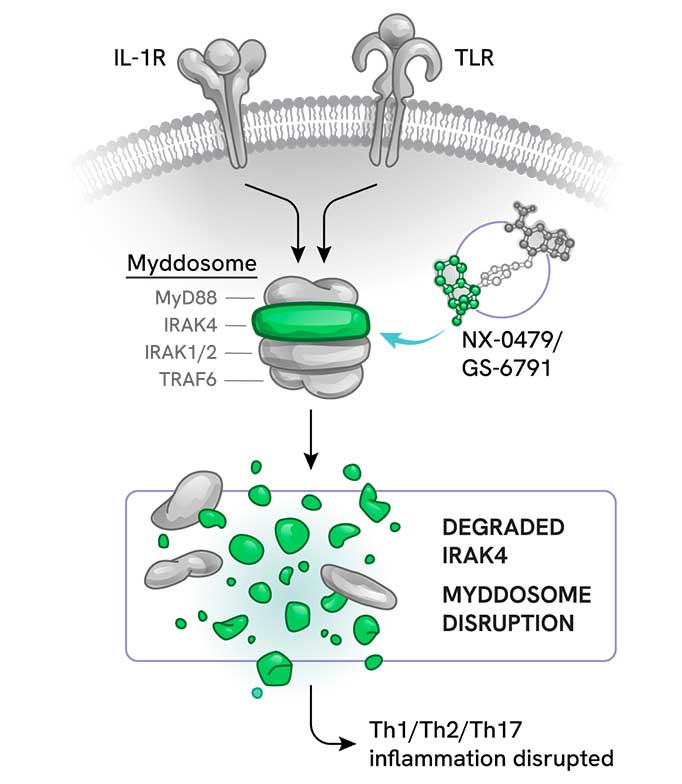
NX-0479 is an innovative small molecule degrader targeting Interleukin-1 Receptor-Associated Kinase 4 (IRAK4). This compound is being developed to address chronic inflammatory diseases, with a particular focus on rheumatoid arthritis.

Scientific rationale

IRAK4, a master regulator of Toll-like Receptor (TLR) and Interleukin-1 Receptor (IL-1R) signaling pathways, plays a crucial role in inflammatory processes. Inappropriate activation of these receptors promotes inflammation and autoimmunity through the release of inflammatory cytokines and chemokines.

Because IRAK4 exhibits both kinase and scaffolding functions, degradation of IRAK4 aims to achieve more complete blockade of the TLR/IL-14 signaling pathways and yield broader anti-inflammatory effects than inhibition alone.

Degrader | STAT6
SAR448272/NX-3911
Type 2 inflammatory diseases
 
clinical trials logo

STAT6 degrader: Novel approach for allergic and inflammatory disorders

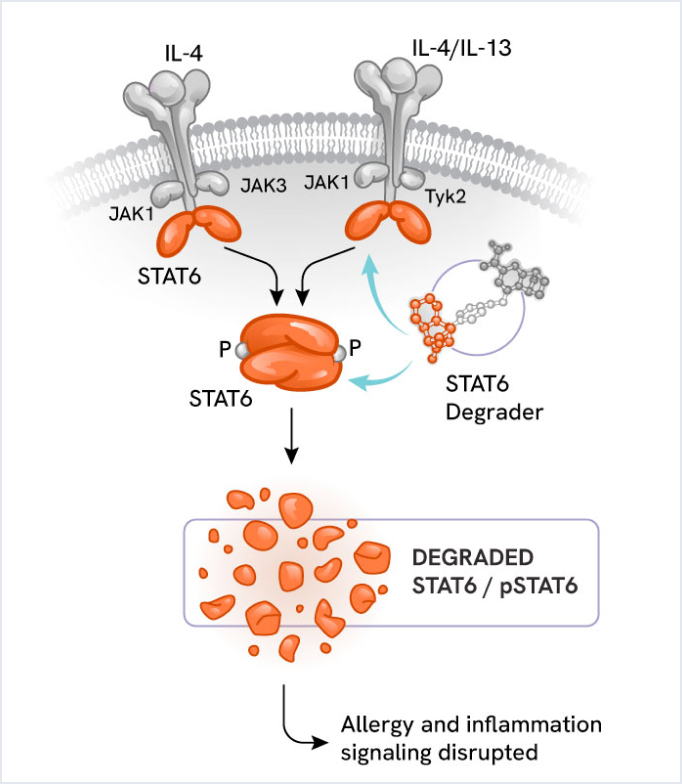
Nurix’s STAT6 degrader is an innovative compound designed to address allergic, autoimmune, and inflammatory processes.

Scientific rationale

Signal Transducer and Activator of Transcription 6, or STAT6, is a key transcription factor in the JAK/STAT signaling pathway. It acts downstream of the inflammatory cytokines IL-4 and IL-13, driving Th2-mediated inflammatory disorders (e.g., allergies, asthma, eczema). By degrading STAT6, this compound aims to reduce Th2-mediated inflammation more effectively than traditional inhibitors.

Degrader | Undisclosed
Multiple
Inflammation / autoimmune
 
clinical trials logo
Degrader antibody conjugate | Undisclosed
Multiple
Inflammation / autoimmune
 
Degrader | BTK
Bexobrutideg (NX-5948)
Healthy volunteers with new formulation

NX-5948-304

Phase 1B/2

Bexobrutideg (NX-5948): BTK degrader for autoimmune disorders

Bexobrutideg is an oral, CNS-penetrant, small molecule degrader of Bruton’s tyrosine kinase (BTK) being developed to address autoimmune disease.

Scientific rationale

BTK acts as a nexus for allergic, autoimmune, and inflammatory processes. It transduces signals downstream of the B-cell receptor, toll-like receptor, and Fc receptors in B cells and myeloid cells. BTK regulates B-cell and myeloid cell responses, mediating auto-antibody and inflammatory cytokine production, mast cell degranulation, and tissue damage.

Degrader | IRAK4
NX‑0479/GS‑6791
Rheumatoid arthritis and atopic dermatitisclinical trials logo
Phase 1Aclinical trials logo

NX-0479: Novel IRAK4 degrader for chronic inflammatory diseases

NX-0479 is an innovative small molecule degrader targeting Interleukin-1 Receptor-Associated Kinase 4 (IRAK4). This compound is being developed to address chronic inflammatory diseases, with a particular focus on rheumatoid arthritis.

Scientific rationale

IRAK4, a master regulator of Toll-like Receptor (TLR) and Interleukin-1 Receptor (IL-1R) signaling pathways, plays a crucial role in inflammatory processes. Inappropriate activation of these receptors promotes inflammation and autoimmunity through the release of inflammatory cytokines and chemokines.

Because IRAK4 exhibits both kinase and scaffolding functions, degradation of IRAK4 aims to achieve more complete blockade of the TLR/IL-14 signaling pathways and yield broader anti-inflammatory effects than inhibition alone.

Degrader | STAT6
SAR448272/NX-3911
Type 2 inflammatory diseases clinical trials logo
IND Enablingclinical trials logo

STAT6 degrader: Novel approach for allergic and inflammatory disorders

Nurix’s STAT6 degrader is an innovative compound designed to address allergic, autoimmune, and inflammatory processes.

Scientific rationale

Signal Transducer and Activator of Transcription 6, or STAT6, is a key transcription factor in the JAK/STAT signaling pathway. It acts downstream of the inflammatory cytokines IL-4 and IL-13, driving Th2-mediated inflammatory disorders (e.g., allergies, asthma, eczema). By degrading STAT6, this compound aims to reduce Th2-mediated inflammation more effectively than traditional inhibitors.

Degrader | Undisclosed
Multiple
Inflammation / autoimmune clinical trials logo
Discoveryclinical trials logo
Degrader antibody conjugate | Undisclosed
Multiple
Inflammation / autoimmune
Discovery
hide2